
Tailoring Training to Match Baseball's Calendar
Eric Campbell • February 8, 2025
Peak Performance Comes From Strategic Preparation

In the world of baseball, the path to peak performance lies in strategic preparation. Each phase of the year presents unique opportunities to build strength, refine skills, and enhance overall athleticism. At PowerSource Performance Fitness & Barbell Club, we design our strength and conditioning programs to align with baseball’s demanding calendar, ensuring athletes achieve their maximum potential while minimizing injury risk.
The Baseball Training Seasons
Understanding the baseball calendar is essential for optimizing training. Typically, a year is divided into three primary phases:
1. Off-Season: The time to build strength, improve mobility, and correct imbalances.
2. Pre-Season: Transitioning to sport-specific drills and ramping up intensity.
3. In-Season: Maintaining performance levels while avoiding overtraining.
In the rest of this post, we are going to take these typical seasons in context to a High School and Travel Team athlete. Let’s break down each phase and the adjustments athletes should make.
________________________________________
Off-Season: Building the Foundation
The off-season is the cornerstone of any successful baseball training plan. During this phase, the focus is on developing strength, power, and endurance while addressing individual weaknesses. Depending on the athlete’s age, body composition should be realistically assessed.
Key Objectives:
• Strength Training: Develop foundational strength through compound movements like squats, deadlifts, and presses. These lifts improve force production, critical for explosive actions like hitting and pitching.
• Mobility Work: Prioritize flexibility and joint stability, especially in the shoulders, hips, and thoracic spine.
• Injury Prevention: Incorporate exercises that address muscle imbalances and strengthen stabilizing muscles.
Example Program:
• Heavy resistance training 3-4 days a week.
• Mobility-focused sessions 2-3 times a week.
• Low-intensity cardio to support recovery and general conditioning.
________________________________________
Pre-Season: Preparing for Performance
As the season approaches, the training focus shifts to baseball-specific movements, speed, and power. Athletes transition from building a foundation to applying their gains to game-like scenarios.
Key Objectives:
• Sport-Specific Drills: Include rotational power exercises, sprint mechanics, and agility work.
• Power Development: Incorporate plyometrics and Olympic lifts to enhance explosiveness.
• Conditioning: Mimic the demands of baseball with high-intensity interval training (HIIT).
Example Program:
• Two days of strength training with reduced volume but higher intensity.
• Plyometric drills and explosive med ball throws.
• Sprint intervals and change-of-direction drills.
High School schedules have a very small window of pre-season, and it can be filled with out-of-town tournaments and the need to take a break from a full Fall Season game schedule that is typical in Southern California. For the “Feeder” Travel Teams, the eighth graders that will become High School Freshmen in a year, there is no need to change up the strength and hypertrophy components of their training program.
________________________________________
In-Season: Maintaining and Sustaining
During the season, the primary goal is to maintain strength and mobility while managing the physical toll of practices and games. Overtraining can lead to fatigue, reduced performance, and increased injury risk.
Key Objectives:
• Load Management: Reduce training volume while maintaining intensity.
• Recovery: Focus on active recovery and mobility work to minimize stiffness and soreness.
• Consistency: Prioritize short, efficient workouts to fit into busy schedules.
Example Program:
• Strength training 1-2 times a week focusing on maintenance.
• Dynamic stretching and mobility routines before games.
• Light conditioning to maintain endurance without overexertion.
There is no doubt that the High School season is a grind, with games, practices, classwork, family and social life make it difficult to get into a routine for strength and conditioning training. This is where time management skills are a must. Take a look at last week’s blog post for The Top 5 Tips for Managing Time as a Student Athlete. For the athletes that are serious about extending their baseball and softball careers after high school, maintaining off-season strength gains throughout the season will make you a strong finisher, keeping you on the path to your baseball goals.
________________________________________
Why Seasonal Adjustments Matter
Adapting training to the baseball calendar ensures athletes are always performing at their best while avoiding burnout or injury. A structured, progressive approach builds resilience and confidence, giving players the competitive edge they need on the field.
Baseball America, in its current ranking of the 2025 Top MLB Draft Prospects, calls out the importance of in-season strength & conditioning:
“The spring season for amateur plyers is critical and each year there’s plenty of movement on the draft board as players unlock new gears, sharpen skills, add physicality, get injured or regress.”
At PowerSource Performance Fitness & Barbell Club, we specialize in crafting customized programs for high school baseball players, travel teams, and more. Whether you’re in the off-season or gearing up for playoffs, our expert coaches are here to guide you every step of the way.
Check out our Baseball & Softball In-Season Strength and Conditioning Programs to learn more about how you can improve your physicality as a ballplayer with our help.
More Recent Posts
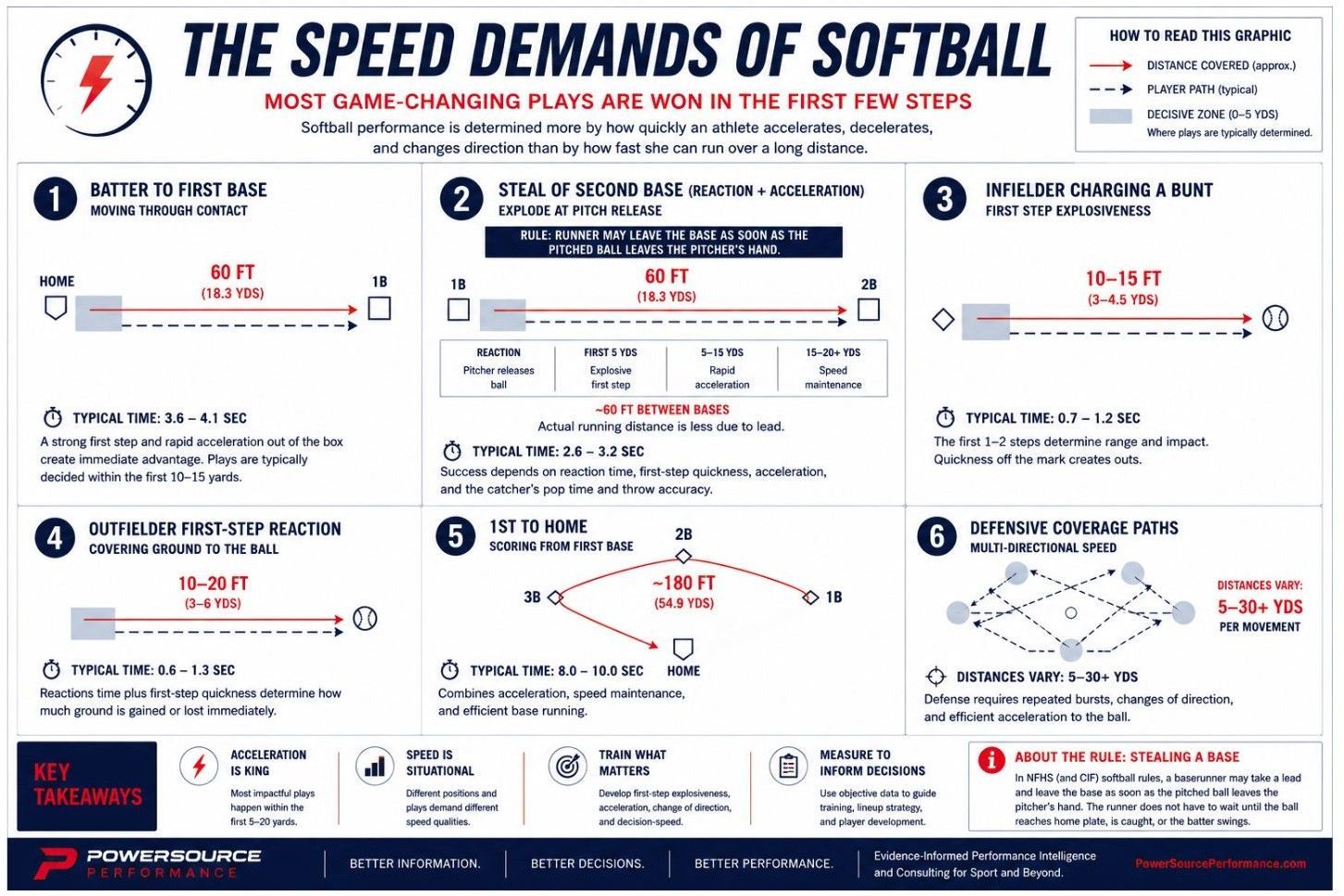
Why the First Few Steps Matter More Than Top Speed in Softball
Great acceleration isn't just running fast. Learn what elite first steps look like and how objective testing reveals exactly where your athlete can improve.
The 40-yard dash measures more than one number. Learn how 10- and 20-yard splits reveal acceleration, speed, and the data that drives smarter training.