What Is Force Plate Testing?

Eric Campbell • June 17, 2026

A coach's guide to understanding power, balance, and injury risk
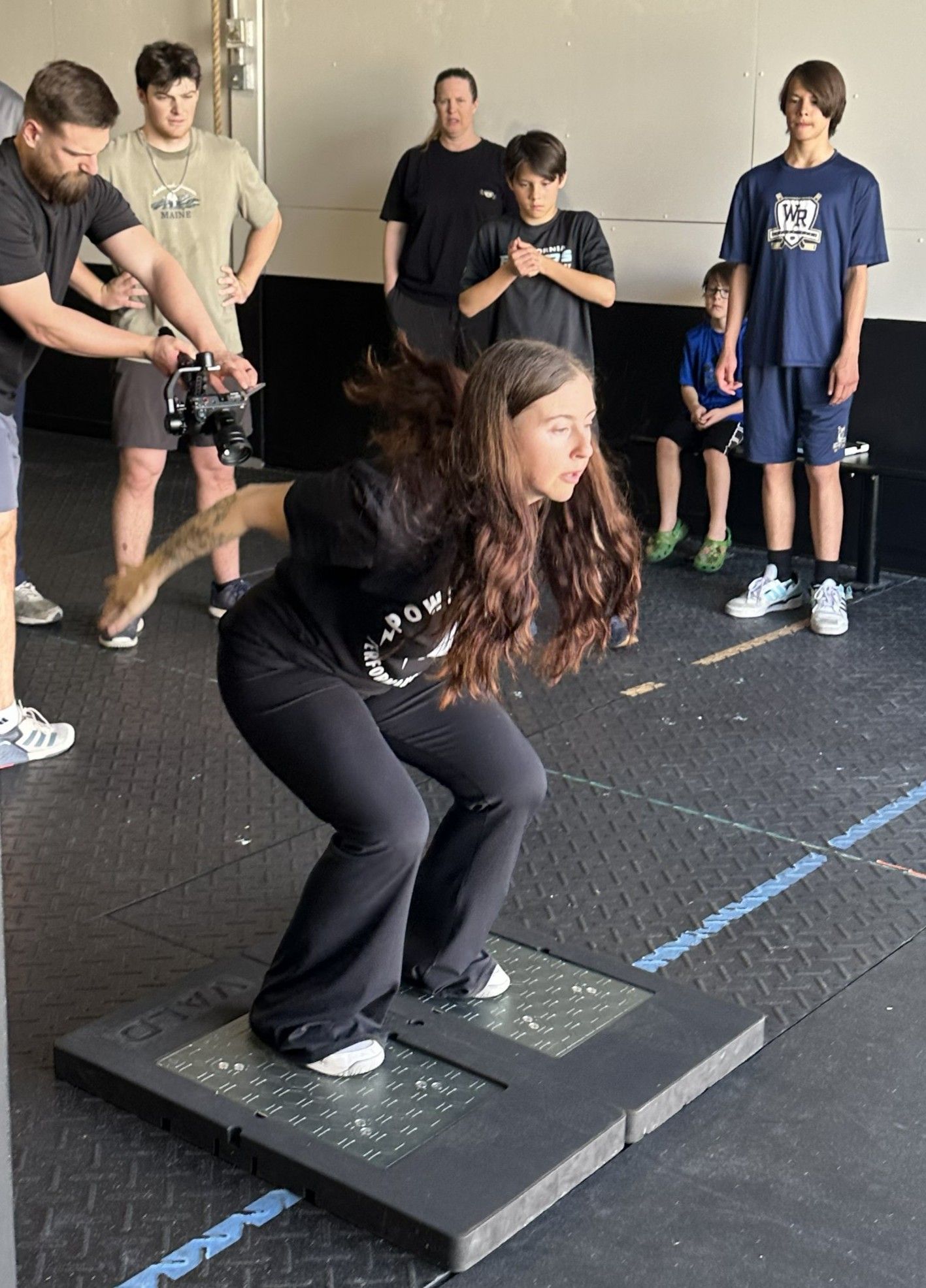
If you've come across terms like "force plates," "ForceDecks," or "sports science testing," you might be wondering what they actually measure—and why professional teams, colleges, and performance centers rely on them.

Put simply, force plate testing measures how athletes produce and absorb force.

Every athletic movement—jumping, sprinting, cutting, landing, changing direction, accelerating—depends on force. Force plates capture objective data about how an athlete moves, so decisions are based on more than the naked eye.

How Force Plates Work

Force plates are highly sensitive platforms that measure exactly how much force an athlete drives into the ground.

When an athlete performs a jump, squat, balance test, or landing assessment, the plates collect thousands of data points in just a few seconds. That data can reveal:

  • Lower-body power
  • Explosiveness
  • Balance and symmetry
  • Braking ability
  • Rate of force development
  • Potential injury risk factors
  • Fatigue and recovery status

Why Force Plate Testing Matters

Most coaches can see when an athlete jumps high. Force plates show why.

Two athletes can reach the exact same jump height while producing force in completely different ways. One generates force quickly and efficiently; the other compensates with technique or leans on one leg more than the other. Without objective testing, those differences usually go unnoticed—until they surface as a plateau or an injury.

What We Measure at PowerSource

At PowerSource Performance Fitness, we use VALD ForceDecks technology to evaluate four key areas:

Countermovement Jump — Measures explosive power and overall jumping ability.

Squat Jump — Measures pure concentric force production, without help from the stretch-shortening cycle.

Drop Jump — Evaluates reactive strength and how efficiently an athlete absorbs and reuses force.

Balance and Asymmetry — Identifies left-to-right differences that can limit performance or raise injury risk.

Who Benefits From Force Plate Testing?

Force plate testing is valuable for athletes across a wide range of sports, including:

  • Football
  • Baseball and softball
  • Soccer
  • Volleyball
  • Basketball
  • Track and field

It's equally useful for athletes returning from injury or preparing for college recruiting.

Testing Is Only the Beginning

The goal isn't simply to collect numbers. It's to identify strengths, uncover opportunities for growth, and build a training plan grounded in objective information.

At PowerSource, we follow a simple cycle:

Measure → Train → Retest

By tracking performance over time, athletes and coaches can see whether training is actually producing results.

Final Thoughts

Force plate testing gives athletes and coaches a deeper understanding of performance than observation alone. Instead of guessing what an athlete needs, coaches can make informed decisions based on measurable data.

The result is more targeted training, faster development, and greater confidence that the time spent training is paying off.

Curious where you or your athlete stands? Schedule a force plate assessment at PowerSource Performance Fitness and find out.

Athlete Assessments

More Recent Posts

By Eric Campbell July 15, 2025
Are you ready to level up your fitness routine? HYROX is “The World Series of Fitness Racing”—a hybrid event that combines 8 km of indoor running with eight standardized functional workout stations. Originating in Hamburg in 2018, HYROX has quickly grown into a global phenomenon, with over 65 events worldwide in 2024. HYROX Race Spotlight: Anaheim, December 2025 The HYROX community is headed to the Anaheim Convention Center on December 13–14, 2025 for the HYROX Anaheim event. Whether you're eyeing Singles, Doubles, or Relay formats, this event is open to everyone—from seasoned competitors to first-timers looking for a fitness challenge. Why Train HYROX—even if You’re Not Racing Many think HYROX prepares you only for race day—but it’s much more than that. Regular HYROX-style workouts help: • Build balanced fitness: Alternating runs with strength, power, and endurance stations trains your whole body efficiently. • Boost stamina: Even non-race pace pacing improves cardiovascular capacity. • Enhance functional strength: Sled pushes and pulls, burpees, and farmer carries translate directly into better real-world movement. HYROX is fitness made functional not just for race day, but for life. Scaling & Modifying: HYROX For Everyone Don’t run? No worries—HYROX is highly adaptable: • Cardio substitutions: Replace running with a shorter walk or jog, or swap it for a bike, row, or ski interval—whatever gets your heart rate up while staying within your ability. • Adjust reps/weights: Use lighter sleds, reduce wall ball reps, or scale range of motion—all under coach guidance. • Relay-style training: Partner up and split the stations, giving yourself built-in recovery and shared challenge. HYROX adapts to every fitness level: if you can push, step, or carry, you can train HYROX. ________________________________________ Getting Started at PowerSource Joining us in Santa Clarita means you'll: 1. Learn the format: Sign up for a free class with us. 2. Scale intelligently: Our coaches will show you progressions to match your current ability. 3. Track improvements: We'll monitor your time, effort, and technique across the various stations. 4. Optional race prep: Want to test yourself in Anaheim? We'll guide you through prep plans and mock-race days. ________________________________________ In summary HYROX is structured, scalable, and functional—great for anyone who wants a disciplined yet adaptable training framework. You don’t need to race to reap the benefits—but if you do want to test your limits, Anaheim is just around the corner. Stay tuned for: • Next week: “Inside a HYROX Workout: 8 Movements, Endless Benefits” Try our HYROX intro session today—
A man is holding a ncaa national championship trophy
By Eric Campbell June 5, 2025
The Link Between Conditioning and Endurance on the Baseball Field
By Mal Felix, IFBB Professional Bodybuilder March 13, 2025
Introduction Starting your bodybuilding journey is an exciting time. The rush of lifting, the thrill of seeing progress, and the sheer drive to push yourself daily can be addicting. But with that excitement comes the risk of making mistakes that can slow progress, cause injury, or even lead to burnout. I know this because I’ve been there. Early in my career, I was too impulsive, chasing results without a proper plan, and I paid the price. Over time, I learned the value of studying those ahead of me—following professional bodybuilders, reading research, blogs, and engaging with seasoned athletes. Learning from others' mistakes was one of the smartest things I did, and I encourage you to do the same. Let’s go over the top 10 mistakes new bodybuilders make and how you can avoid them. ________________________________________ 1 . Skipping the Basics Why It’s a Mistake: Too many beginners overlook form and technique, focusing instead on moving the weight from point A to point B. I see it all the time—guys curling dumbbells too heavy, wrists bent back, no real bicep contraction happening. Poor form not only minimizes muscle activation but also increases the risk of injury. How to Avoid It: Master the basics first. Focus on proper form and full range of motion. It’s okay to start light. Spend time learning correct technique from credible sources—watch videos from professional bodybuilders, hire a knowledgeable coach, or ask experienced lifters for guidance. Perfect your compound lifts before jumping into advanced movements. Don’t let ego dictate your weights—progress methodically, and soon enough, you’ll be squatting 315 lbs with full control and range of motion. ________________________________________ 2. Neglecting Nutrition Why It’s a Mistake: Many new lifters think supplements can replace whole foods. Others either undereat and fail to grow or overeat on junk and gain unnecessary fat. Your diet is the foundation of your progress, and if it's not optimized, your performance in the gym will suffer. How to Avoid It: Whole food is king. My coach always told me, “Whole food is better,” and he was right. Supplements should only supplement what’s missing—not replace meals. Stick to a structured meal plan: at least 40g of protein 4-5 times a day, eating every 3-4 hours, and avoiding unnecessary snacking. Focus on lean proteins, complex carbohydrates, and healthy fats. Meal prep ahead of time to avoid making poor food choices in the moment. ________________________________________ 3. Overtraining Why It’s a Mistake: More isn’t always better. The gym is where you break down muscle; growth happens outside of it. Overtraining leads to fatigue, stalled progress, and even injury. If you don’t allow proper recovery time, you will hit a plateau or worse, experience burnout. How to Avoid It: Watch for signs like constant soreness, lack of motivation, and declining strength. Follow a structured training split that allows muscle groups adequate time to recover. Quality over quantity—train with intensity but give your body time to rest and grow. ________________________________________ 4. Ignoring Recovery Why It’s a Mistake: If you’re constantly sore or fatigued 2-3 days after a workout, you’re not recovering properly. Poor sleep and skipping rest days can destroy progress. Many lifters don’t realize that muscle growth occurs during recovery, not during the workout itself. How to Avoid It: Sleep at least 7-9 hours per night. Prioritize quality sleep by limiting screen time before bed, keeping a consistent sleep schedule, and optimizing your sleeping environment. Incorporate active recovery techniques like stretching, foam rolling, and mobility exercises. Listen to your body—if it’s telling you to take a rest day, take it. Recovery is when muscles actually grow. ________________________________________ 5. Not Tracking Progress Why It’s a Mistake: If you’re not tracking your lifts, weight, or body composition, you’re guessing your progress. Many lifters get frustrated when they don’t see immediate changes, but without tracking, they have no reference point to measure improvement. How to Avoid It: Keep a log of your workouts and measurements. Track strength gains, body weight, and even how you feel. Take progress photos every few weeks. Small improvements over time lead to big results, and having data allows you to make informed adjustments to your training and nutrition. ________________________________________ 6. Being Impatient Why It’s a Mistake: Unrealistic expectations lead to frustration. I’ve seen too many people quit because they didn’t get a six-pack in three months. Progress takes time, and trying to rush it often leads to extreme dieting, overtraining, or even giving up altogether. How to Avoid It: Set S.M.A.R.T. goals (Specific, Measurable, Achievable, Relevant, Time-bound). Understand that bodybuilding is a marathon, not a sprint. Stay consistent, and the results will come. Trust the process and enjoy the journey. ________________________________________ 7. Avoiding Compound Movements Why It’s a Mistake: Isolation exercises have their place, but if you’re skipping squats, deadlifts, and bench press, you’re missing out on serious gains. Compound lifts activate multiple muscle groups, leading to greater overall muscle development and strength gains. How to Avoid It: Get comfortable being uncomfortable. Master the big lifts. They build strength, size, and overall athleticism like nothing else. Don’t let fear or lack of confidence keep you from incorporating these movements into your routine. ________________________________________ 8. Focusing Solely on Aesthetics Why It’s a Mistake: Bodybuilding isn’t just about looking good in the mirror. Strength, mobility, and overall health matter just as much. Many new lifters prioritize appearance over performance, which can lead to imbalances and weaknesses. How to Avoid It: Stop spending half your gym time posing. Train for performance, function, and longevity. A great physique is a byproduct of smart training and discipline. Incorporate mobility work and functional training into your routine to ensure long-term success. ________________________________________ 9. Following Fad Workouts or Diets Why It’s a Mistake: Every year, new diet and workout fads pop up promising quick fixes. Truth is, the best plan is the one you’ll stick to. Constantly switching programs prevents you from making real progress. How to Avoid It: Stick to the basics. Look at the physiques from the ‘60s, ‘70s, and ‘80s—those guys built legendary bodies with time-tested methods. Focus on progressive overload, consistent nutrition, and recovery. History proves what works. ________________________________________ 10. Neglecting Mental Health Why It’s a Mistake: Bodybuilding is as much a mental game as it is a physical one. Burnout, self-doubt, and stress can derail progress. If you’re not mentally strong, setbacks will hit harder and motivation will fade. How to Avoid It: Develop mental resilience. Set goals, manage stress, and keep a healthy balance. Surround yourself with a supportive community, practice self-discipline, and remind yourself why you started. Your mindset will determine your success just as much as your training and nutrition. ________________________________________ Conclusion Bodybuilding is a journey of discipline, patience, and learning. Avoid these common mistakes, stay consistent, and focus on gradual, sustainable progress. Trust me—if you put in the work smartly and consistently, you will see results. Keep grinding! rent source .
More Posts