What Does a 40-Yard Dash Really Measure?
Why the 10- and 20-yard splits tell you more than the final time ever could.
The 40-yard dash is the most famous speed test in sports — but if you only look at the final time, you're missing most of what it can tell you. Every spring, NFL Combine results dominate headlines and athletes race to post their fastest 40 times online. Yet that single number hides the part that actually drives better training: the splits.
So what does a 40-yard dash really measure? In truth, it's three tests in one. The 10-yard split measures acceleration, the 20-yard split measures how speed builds, and the full 40 reflects top-end speed and the ability to hold it. Read together, those numbers explain not just how fast an athlete is, but how they get fast — and that's where the real coaching value lives.
The Problem With Looking Only at the Final Time
When most people hear "40-yard dash," the first question is always the same: "What did he run?"
The final time matters, but on its own it's incomplete. Picture two athletes who both cross the line at exactly 5.00 seconds. On paper they look identical — yet they may have gotten there in completely different ways. One explodes out of the start and fades over the back half. The other is slow off the line but keeps building speed all the way through. Same time, opposite athletes, and very different training needs.
Without split times, coaches never see that distinction. They see the destination but none of the route.
The Three Tests Hidden Inside the 40
10-Yard Split
The first 10 yards measure acceleration, and for football players this is often the most important portion of the entire sprint — most plays are won or lost within a few short steps. A strong 10-yard split reflects:
- First-step explosiveness
- Force production
- Starting mechanics
- Lower-body power
20-Yard Split
The 20-yard split captures continued acceleration. It tells coaches whether an athlete can keep building speed after the initial burst, or whether they top out early and have little left to give.
40-Yard Time
The full 40 reflects overall sprint performance: acceleration, top-end speed development, sprint mechanics, and the ability to maintain velocity once it's reached. It's the sum of everything that happened in the first 30 yards — not a separate quality of its own.
What Coaches Should Look For
Instead of asking only for a final time, coaches get far more value by evaluating the whole sprint:
10-yard split
20-yard split
40-yard time
Velocity development (how quickly speed is built)
Velocity retention (how well speed is held)
Together, these numbers turn a single result into a profile — and a profile points directly to specific training priorities.
What the 40 Does Not Measure
For all its usefulness, the 40-yard dash doesn't directly measure:
- Strength
- Power
- Agility
- Change of direction
- Football skill
- Game intelligence
It's one piece of a much larger performance picture, and it should be read that way.
Better Data Creates Better Decisions
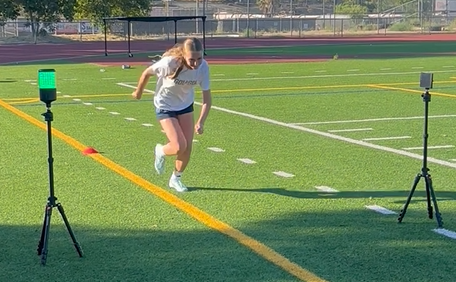
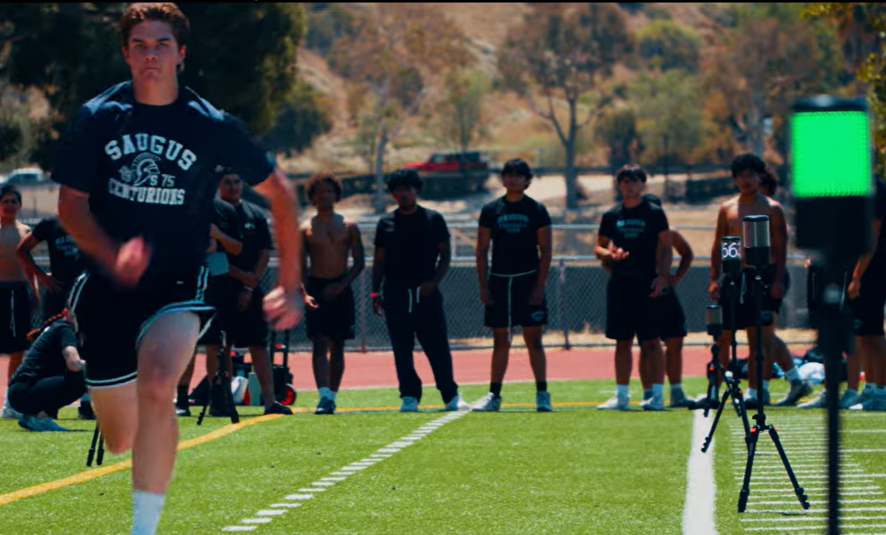
At PowerSource Performance Fitness, we use VALD SmartSpeed timing gates to capture split times and velocity data on every sprint. That lets athletes and coaches understand not just how fast an athlete is, but how they become fast — where they generate their speed and where they lose it.
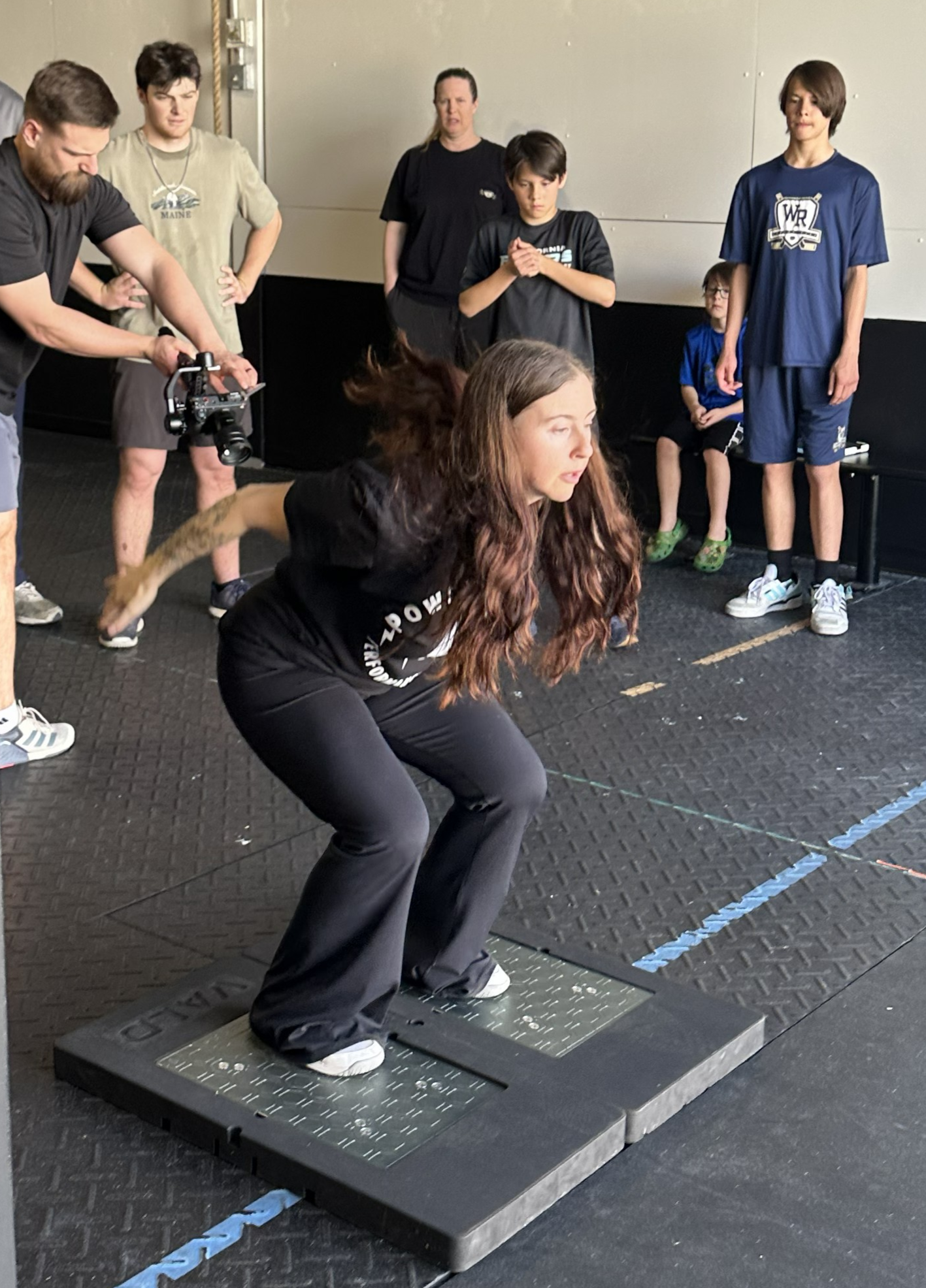
Paired with force plate testing, sprint data helps build a complete picture of athletic performance rather than a single headline number.
PowerSource Performance provides athlete speed testing, force plate testing, and performance assessments for athletes throughout Santa Clarita, Valencia, Stevenson Ranch, Castaic, and the surrounding Southern California area.
Final Thoughts
The 40-yard dash is not just a sprint test. It's an assessment of acceleration, speed development, and movement efficiency — three qualities packed into a few seconds of effort. The more information coaches collect from that sprint, the sharper and more individualized their training decisions become.
The next time you see a 40 time, don't just ask how fast. Ask how.
Coaches, would you like to schedule a SpeedGate dash for your team?
More Recent Posts