What Does Great Acceleration Actually Look Like?
Why the fastest athlete isn't always the best accelerator—and how to tell the difference.
When most people think about speed, they picture the athlete with the fastest 40-yard dash.
But here's what many parents—and even coaches—miss: the fastest athlete isn't always the one with the best acceleration.
Acceleration is its own athletic skill. It's the ability to go from zero to full speed as quickly as possible—and in nearly every sport, that matters far more than top-end speed.
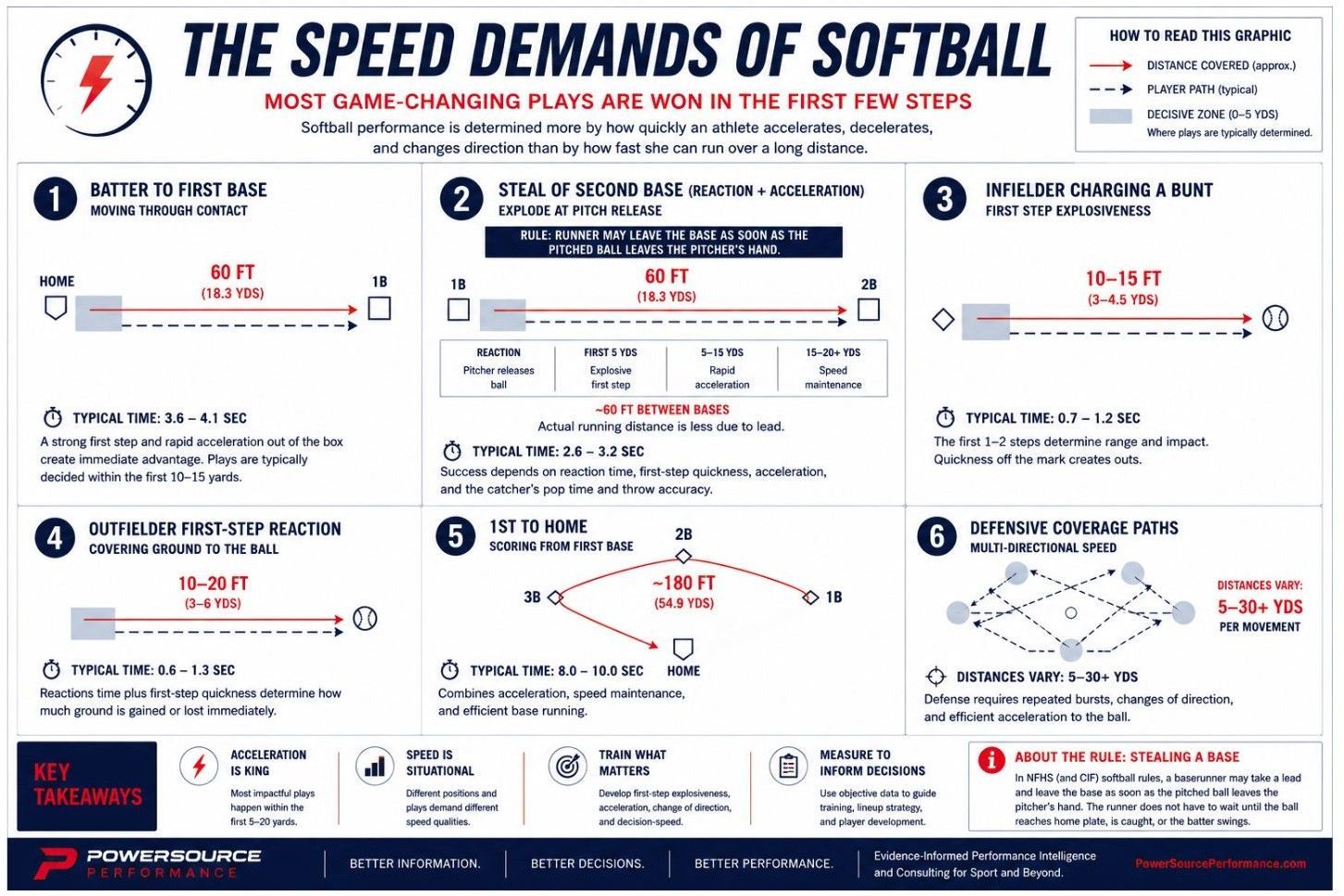
Think about football, baseball, softball, soccer, basketball, volleyball, tennis, or lacrosse. Very few athletes ever reach their maximum speed during competition. Instead, they're constantly accelerating:
- Chasing a loose ball
- Beating a defender to the corner
- Closing on a tackle
- Exploding out of a batting stance
- Getting down the line to first base
- Driving toward the basket
Those first few steps often decide who wins the play.
Great Acceleration Isn't Just "Running Hard"
Elite acceleration is surprisingly technical. Athletes who accelerate well tend to share four characteristics.
A powerful first push. Great accelerators put large amounts of force into the ground. Instead of simply moving their legs faster, they drive the ground backward with every step. More force means greater acceleration.
The right body angle. When an athlete first begins sprinting, the body shouldn't be upright. Elite athletes lean forward naturally, so every step keeps producing forward momentum. Standing up too early kills acceleration.
Rapid force production. This isn't just about strength—it's about how quickly an athlete can apply that strength. This quality, often called explosive power, is what separates average athletes from exceptional ones.
Efficient mechanics. The best athletes don't waste movement. Their arms drive aggressively, their hips stay stable, and their feet land underneath the body instead of reaching too far out in front. Efficiency creates speed.
Can You Tell If Your Athlete Accelerates Well?
Not just by watching.
Plenty of athletes look fast. Others appear slow but produce outstanding acceleration once you measure it objectively. That's why timing matters.
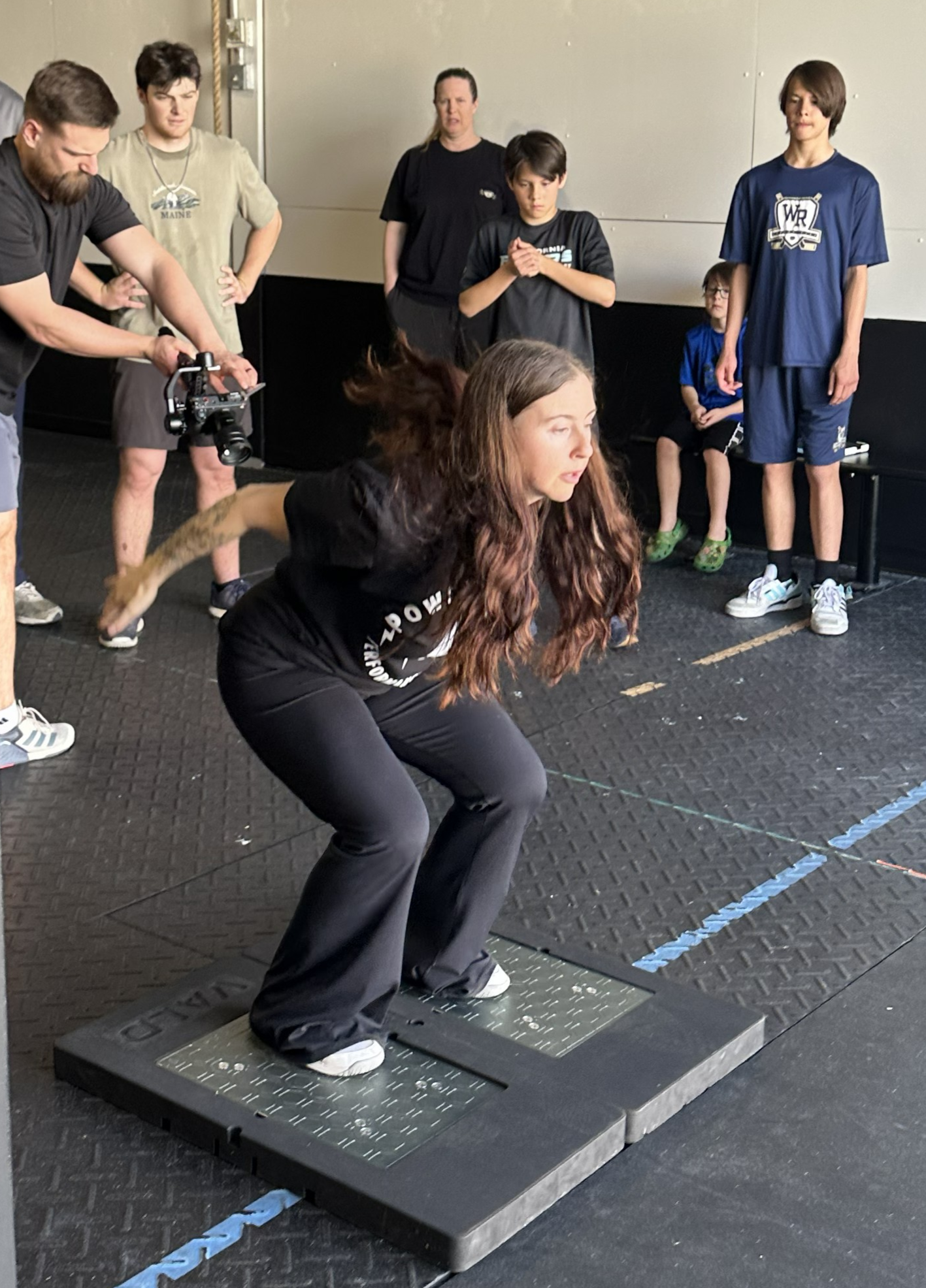
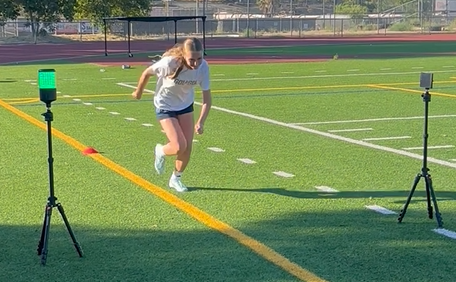
At PowerSource, we measure acceleration with VALD SmartSpeed timing gates, capturing split times that reveal exactly how an athlete performs through each phase of a sprint. Instead of guessing, we can pinpoint:
- First-step explosiveness
- Initial acceleration
- Speed development
- Velocity maintenance
- The specific areas limiting performance
Those measurements let us build training around the athlete's actual needs—not assumptions.
Why This Matters
Imagine two athletes who both run a 5.10-second 40.
One reaches top speed almost immediately, then fades. The other starts slowly but finishes strong. Their overall time is identical—but their training should be completely different.
Without objective testing, both athletes usually receive the exact same workouts. That's a missed opportunity.
Measure. Train. Retest.
Acceleration isn't a fixed talent. It can improve dramatically with targeted training. The first step is simply knowing where your athlete stands today.
Once we measure performance objectively, we can:
- Identify strengths
- Prioritize weaknesses
- Build individualized training
- Track improvement over time
That's how meaningful athletic development happens—not by guessing, but by measuring.
Final Thought
Great acceleration isn't simply being fast. It's the ability to produce force efficiently, apply it quickly, and repeat it every time the whistle blows.
When athletes understand how they accelerate—and coaches have objective data to guide development—they can train with purpose instead of hope.
That's the foundation of the PowerSource philosophy:
Measure → Train → Retest
Because improvement should never be left to chance.
Schedule Your Assessment
Wondering how your athlete's acceleration really compares?
Schedule a PowerSource Athlete Assessment and find out exactly how your athlete accelerates, where improvement is possible, and what to focus on next.
Objective data. Individualized recommendations. Better athletic development.
Book your assessment today.
More Recent Posts