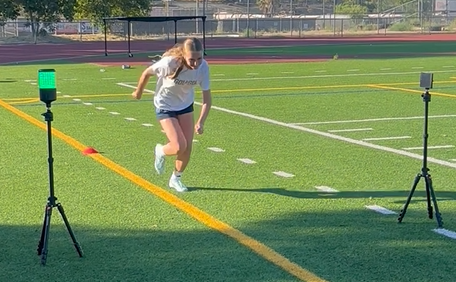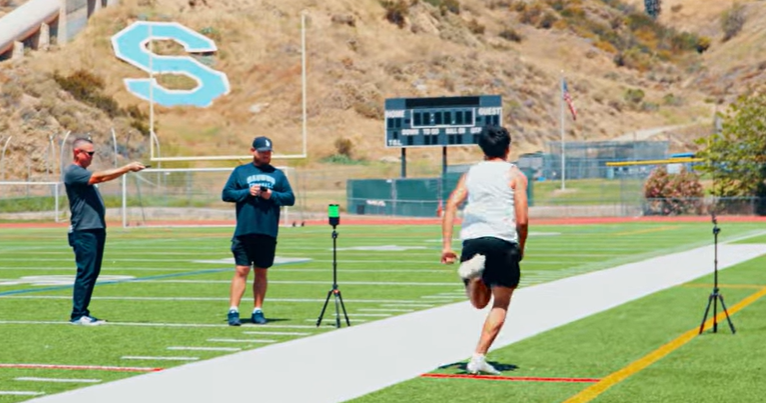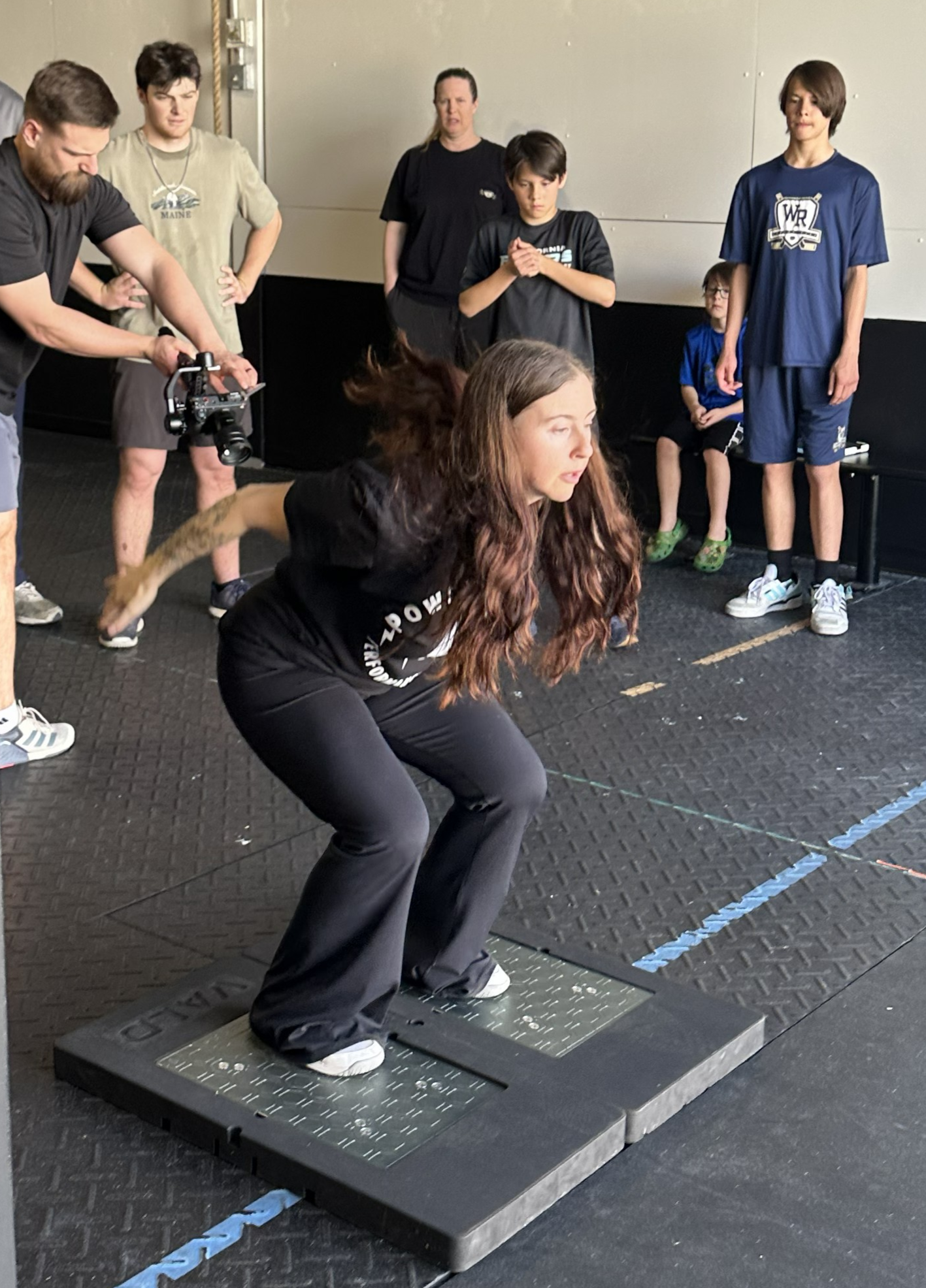
Softball Is a Game of First Steps
Why the First Few Steps Matter More Than Top Speed in Softball
Every softball coach has watched it happen.
A batter hits a routine ground ball to shortstop. The throw is clean. The first baseman catches it just as the runner reaches the bag.
Safe.
Everyone in the stands says the same thing: "She's just really fast."
But was she? Not necessarily.
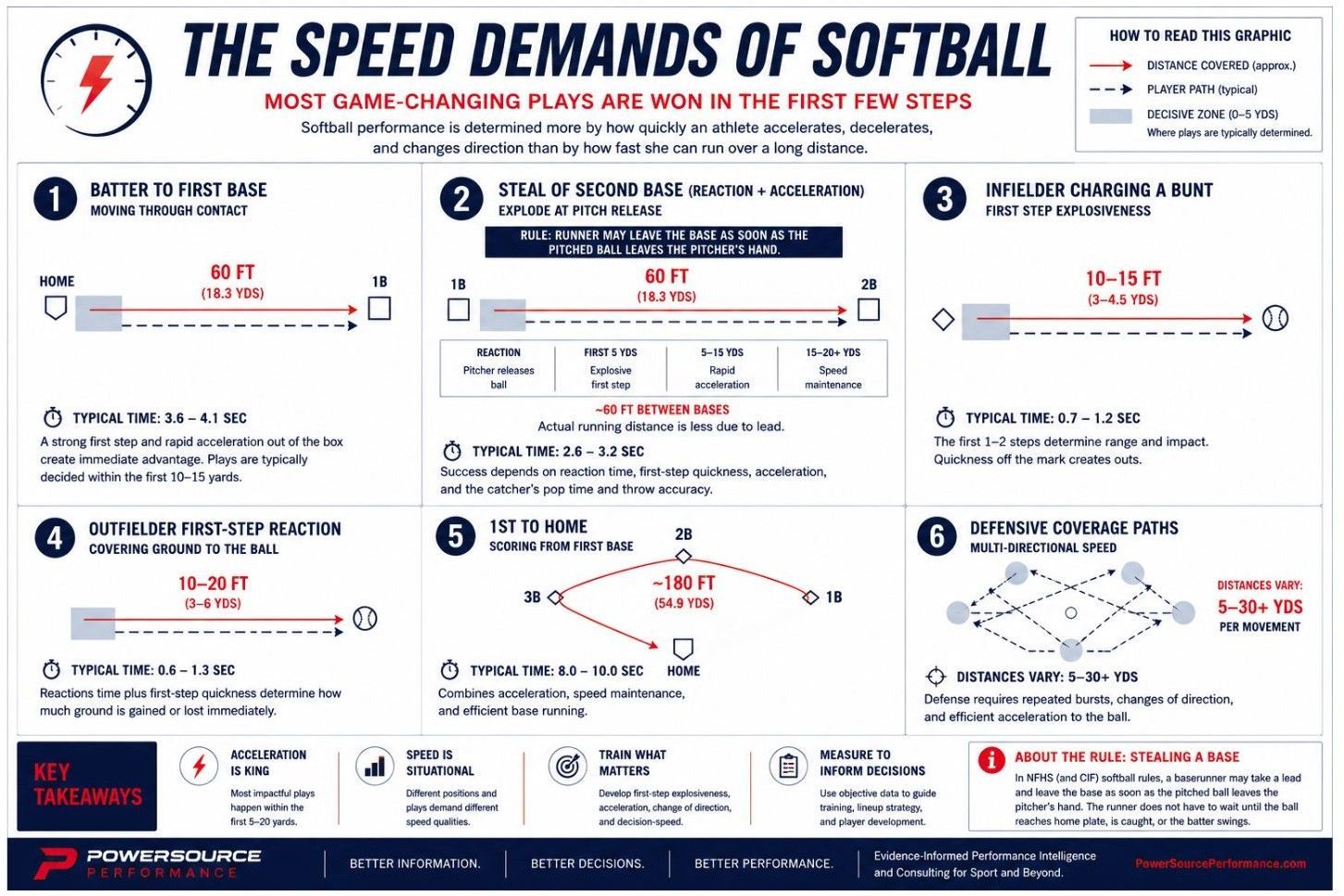
In softball, many of the most important plays are decided before an athlete ever reaches her fastest running speed. The ability to explode out of the batter's box, react to a batted ball, steal second base, or charge a bunt depends far more on how quickly an athlete accelerates than on how fast she can eventually run.
Understanding that difference changes how athletes should train — and how coaches should evaluate athletic performance.
The Common Misunderstanding
When we describe an athlete as "fast," we're often combining several different physical abilities into a single word. Sports science separates them. An athlete may have:
- excellent acceleration
- exceptional top-end sprint speed
- quick first-step reactions
- outstanding change-of-direction ability
These are related qualities, but they are not the same.
A player who reaches full speed quickly may consistently beat another athlete to first base, even if the second athlete is capable of running faster over a much longer distance. That's because softball rarely gives athletes enough time or space to reach their maximum sprint speed. Instead, the game rewards athletes who can produce force rapidly during their first few steps.
What This Means for Coaches, Parents, and Athletes
Here's what that distinction looks like in practice.
For Coaches Evaluate the qualities that influence game performance — not just the outcomes you can observe during competition. Two players who look equally fast on the bases may need very different training plans.
For Parents Understand that two athletes who appear equally "fast" may have very different physical strengths and developmental needs. Speed isn't one skill — it's several, and each responds to different training.
For Athletes Improving your first few steps isn't about trying harder. It's about developing the physical qualities that let you produce force more effectively and move more efficiently.
Invest in Better Information
Parents invest countless hours supporting their athletes through practices, travel ball, private lessons, and tournaments. That investment deserves to be pointed in the right direction. Objective assessment helps ensure that training time is focused on the physical qualities that matter most — rather than guessing what your athlete needs, you get clear, measurable information that can guide training decisions throughout the season.
If you'd like to understand your athlete's strengths — and where the greatest opportunities for improvement exist — we'd love to help.
Explore PowerSource Softball Performance Testing and Athlete Development
More Recent Posts