Testing
What Is Force Plate Testing?
A Coach’s Guide to Understanding Power, Balance, and Injury Risk
Eric Campbell · Jun 17, 2026 · 2 min read
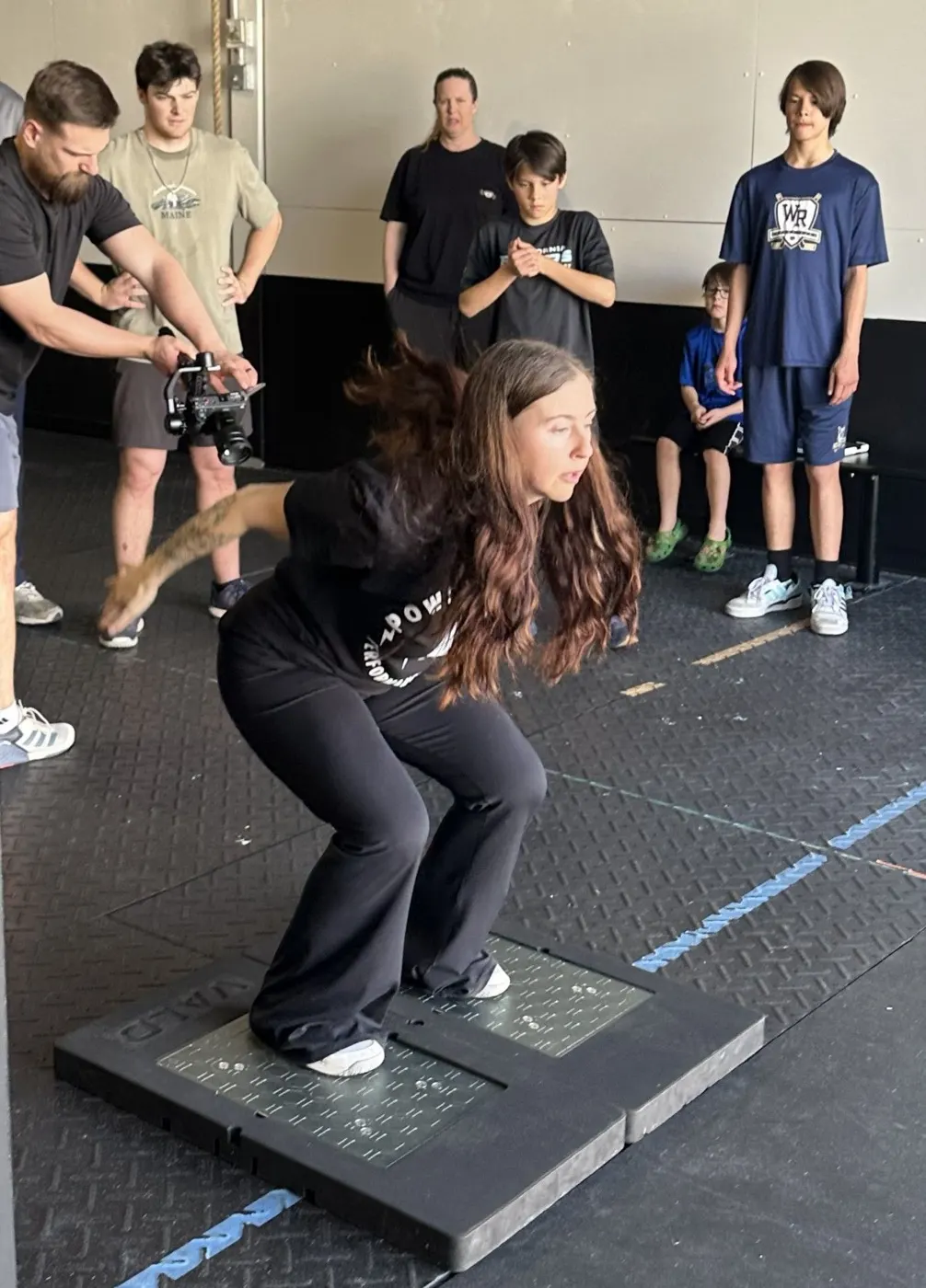
If you’ve come across terms like “force plates,” “ForceDecks,” or “sports science testing,” you might be wondering what they actually measure, and why professional teams, colleges, and performance centers rely on them.
Force plate testing measures how athletes produce and absorb force.
Every athletic movement depends on force: jumping, sprinting, cutting, landing, changing direction, accelerating. Force plates capture objective data about how an athlete moves, so decisions are based on more than the naked eye.
How Force Plates Work
Force plates are highly sensitive platforms that measure exactly how much force an athlete drives into the ground.
When an athlete performs a jump, squat, balance test, or landing assessment, the plates collect thousands of data points in just a few seconds. That data can reveal:
- Lower-body power
- Explosiveness
- Balance and symmetry
- Braking ability
- Rate of force development
- Potential injury risk factors
- Fatigue and recovery status
Why Force Plate Testing Matters
Most coaches can see when an athlete jumps high. Force plates show why.
Two athletes can reach the exact same jump height while producing force in completely different ways. One generates force quickly and efficiently; the other compensates with technique or leans on one leg more than the other. Without objective testing, those differences usually go unnoticed until they surface as a plateau or an injury.
What We Measure at PowerSource
At PowerSource Performance Fitness, we use VALD ForceDecks technology to evaluate four key areas:
Countermovement Jump. Measures explosive power and overall jumping ability.
Squat Jump. Measures pure concentric force production, without help from the stretch-shortening cycle.
Drop Jump. Evaluates reactive strength and how efficiently an athlete absorbs and reuses force.
Balance and Asymmetry. Identifies left-to-right differences that can limit performance or raise injury risk.
Who Benefits From Force Plate Testing?
Force plate testing is valuable for athletes across a wide range of sports, including:
- Football
- Baseball and softball
- Soccer
- Volleyball
- Basketball
- Track and field
It’s equally useful for athletes returning from injury or preparing for college recruiting.
Testing Is Only the Beginning
We don’t test just to collect numbers. We test to identify strengths, uncover opportunities for growth, and build a training plan grounded in objective information.
At PowerSource, we follow a simple cycle: Measure → Train → Retest. By tracking performance over time, athletes and coaches can see whether training is actually producing results.
What Force Plate Data Gives You
Force plate testing gives athletes and coaches a deeper understanding of performance than observation alone. Instead of guessing what an athlete needs, coaches can make informed decisions based on measurable data.
The result is more targeted training and more confidence that the time spent training is paying off.
To see where you or your athlete stands, schedule a force plate assessment at PowerSource Performance Fitness.